

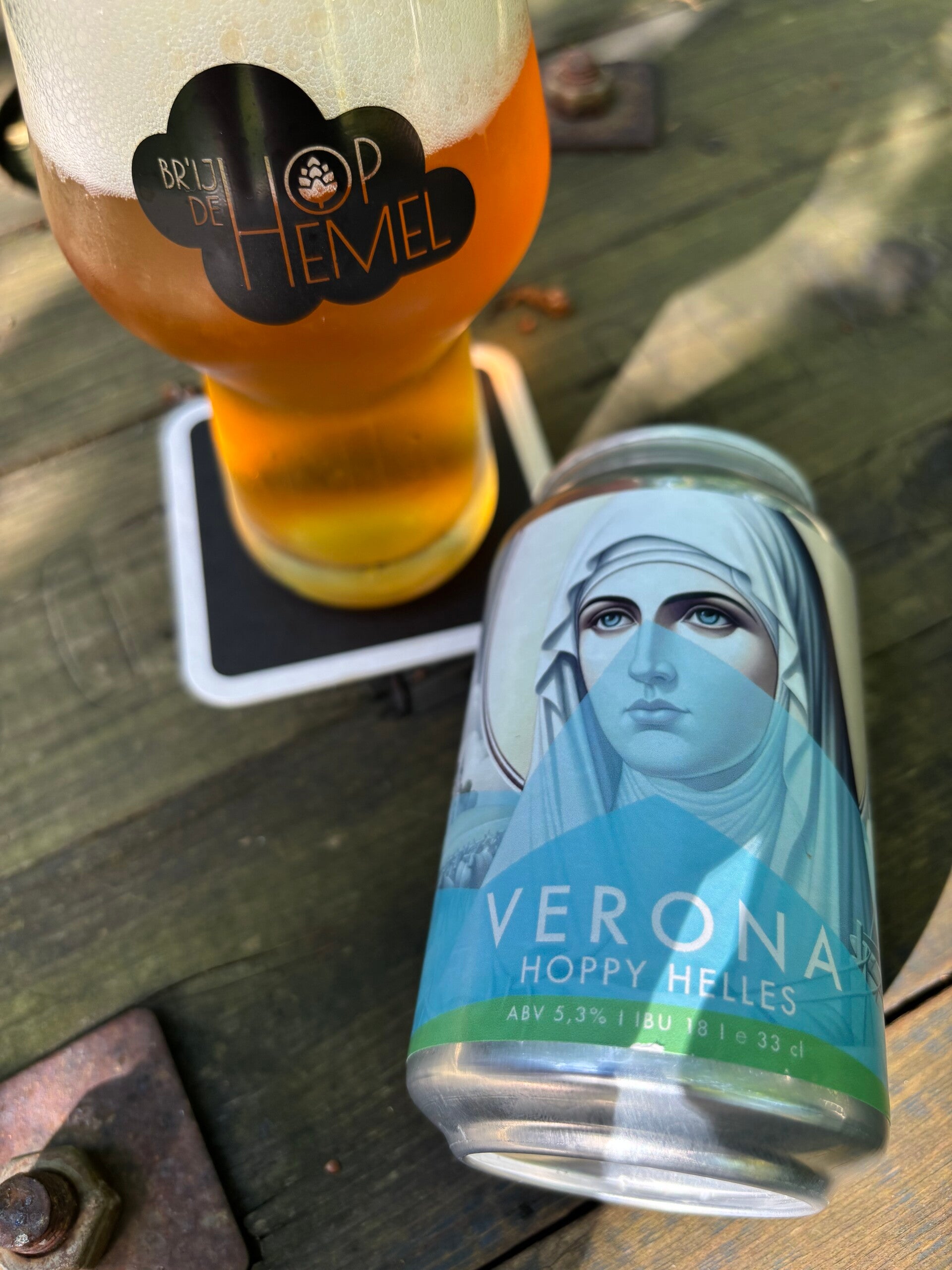
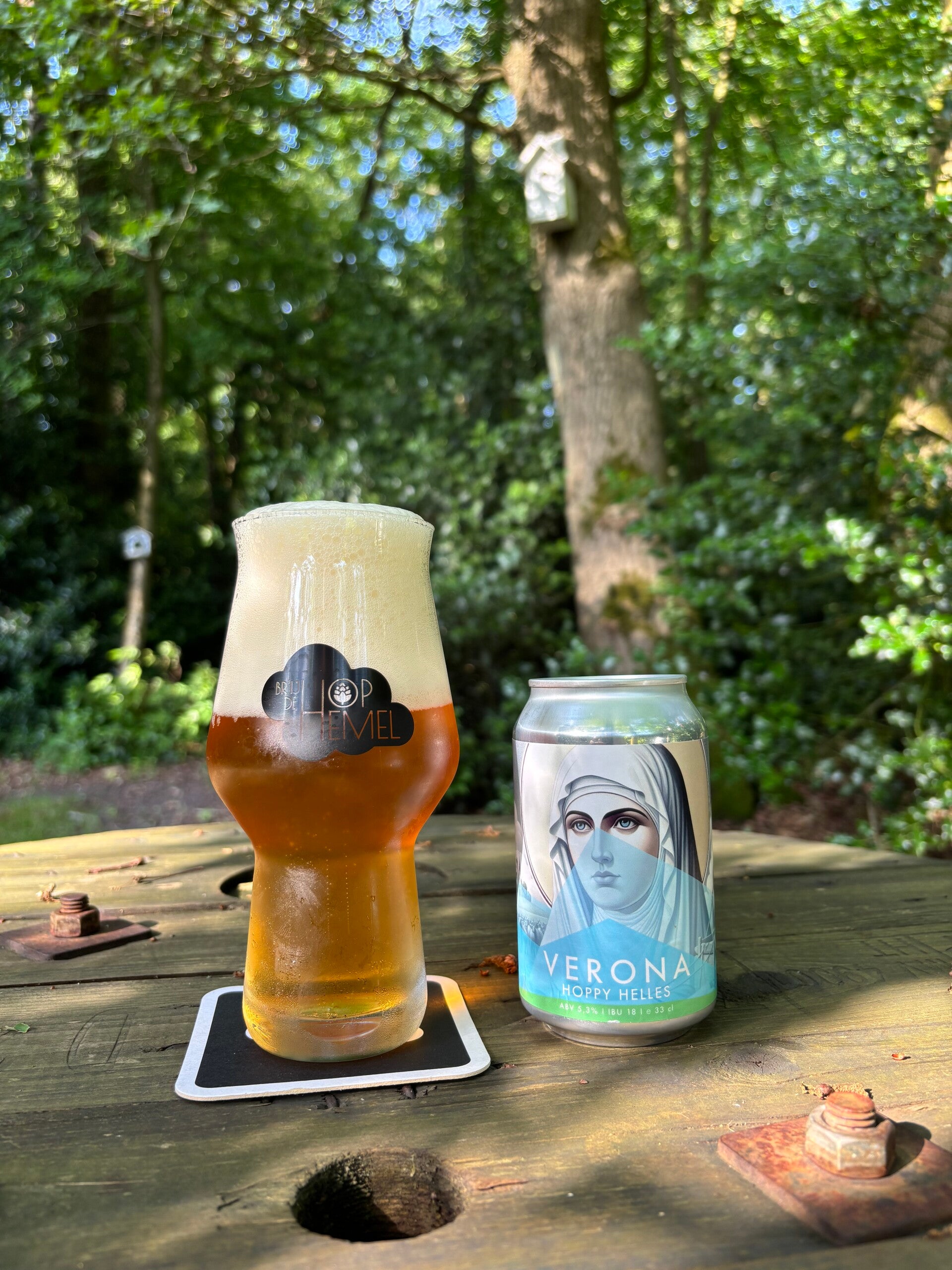
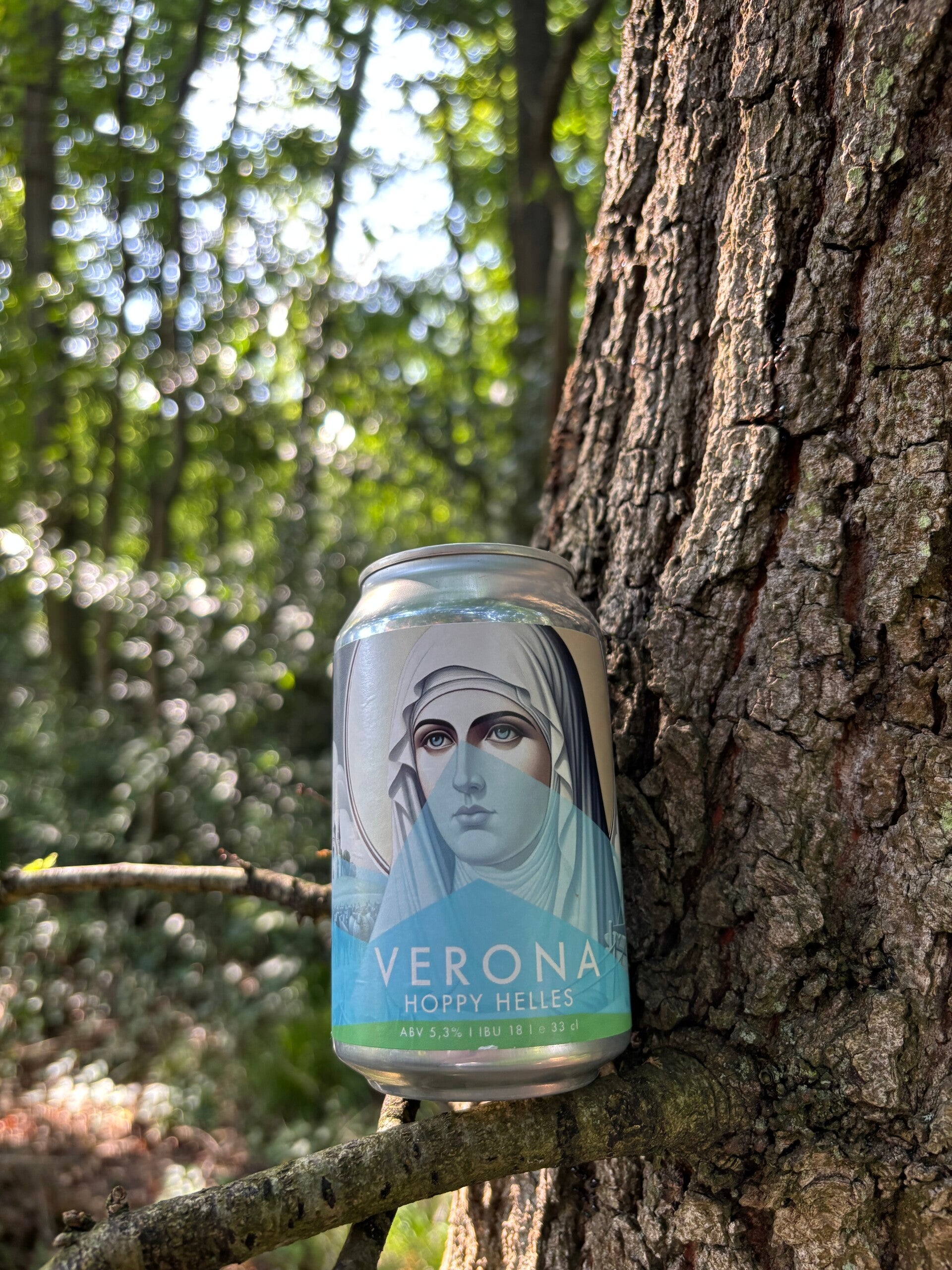
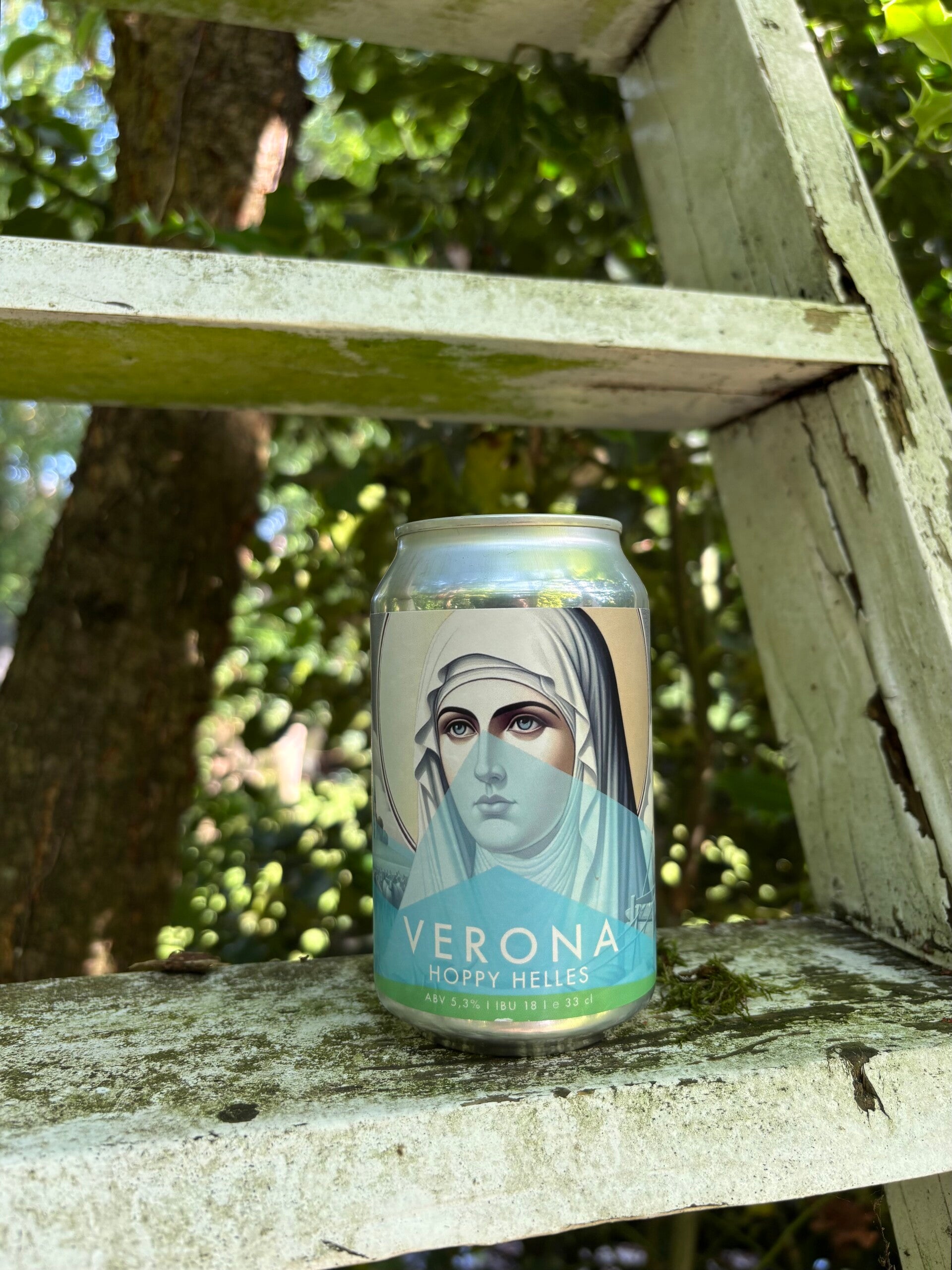
VERONA – HOPPY HELLES (alc. 5.3% vol, IBU:18). SMAAK/AROMA: Deze goudkleurige Helles met een heldere uitstraling en een mooie schuimkraag heeft rijke moutaroma's met fruitige tonen. Je smaakpapillen worden verwend met moutige smaken, een aangename hopbitterheid, citrus- en florale accenten. De afdronk is hoppig en droog, een Helles met een hoppige Brauw & Hophemel twist. Dit biertype heeft meer body dan een pils met een vergelijkbaar alcoholpercentage. Een heerlijk bier om van te genieten tijdens de warme zomermaanden. Best geserveerd op 6°C.
WIST-JE-DAT?: Dit bier was het 50ste bier van Brouwerij de Hophemel en ontstond uit een samenwerking met BRAUW. Het werd gebrouwen volgens de decoctiemethode, een traditionele manier van maischen waarbij een deel van het beslag naar een andere ketel wordt overgebracht en aan de kook wordt gebracht. Daarna wordt dit kokende deel opnieuw toegevoegd aan het oorspronkelijke beslag, zodat de volledige massa de juiste temperatuur bereikt voor de volgende maischstap. Deze techniek kan de kwaliteit van verschillende, vooral Duitse, bierstijlen verhogen en zorgt ervoor dat het moutige karakter van het bier sterker naar voren komt. Decoctiemaischen dateert uit de tijd vóór het gebruik van de thermometer. Toen was het moeilijk om nauwkeurig de juiste temperaturen te bereiken waarbij de enzymen optimaal hun werk konden doen. Brouwers ontdekten door ervaring dat ze, door telkens een vaste hoeveelheid beslag te koken en daarna opnieuw toe te voegen aan de rest, betrouwbaar de juiste temperatuur voor de volgende maischstap bereikten. Zo konden ze een constantere kwaliteit garanderen bij het brouwen van verschillende batches van hetzelfde bier.
WIST-JE-OOK-DAT?: Helles, ook wel bekend als hell, is een traditioneel Duits licht bier dat vooral geassocieerd wordt met Zuid-Duitsland, met name München. Het Duitse woord hell betekent "helder", "licht" of "bleek", wat de heldere, goudkleurige uitstraling van het bier weerspiegelt. Bieren in helles-stijl zijn doorgaans licht van kleur, medium-vol van smaak en zachtzoet, met een gebalanceerd moutaroma en -smaak. Ze hebben meestal een lage bitterheid, rond de 15-25 IBU, en een hopkarakter dat ingetogener is dan dat van Duitse pilsners. De meeste varianten worden gefilterd voor het bottelen, wat het bier zijn heldere uiterlijk geeft, hoewel sommige brouwerijen ook ongefilterde varianten produceren. Münchener helles wordt gebrouwen met koele fermentatie met lagergist, zoals Saccharomyces pastorianus, en traditionele bitterhop, zoals Hallertau. Tot de jaren 60 was helles wijdverspreid verkrijgbaar in Duitstalige regio's. Na verloop van tijd werd Helles in veel gebieden echter geleidelijk vervangen door pilsbieren, een verschuiving die mede werd beïnvloed door veranderende consumentenvoorkeuren van tapbier naar flesbier. Buiten Zuid-Duitsland begon Helles rond 2010 weer aan populariteit te winnen, met name in Berlijn, waar het traditionele imago opnieuw in de mode raakte.
VERONA – HOPPY HELLES (alc. 5.3% vol, IBU:18). TASTE/AROMA: This golden-coloured Helles with a clear appearance and good head has rich malty aromas with fruity notes. Your taste buds will be treated to malt-forward flavours; a decent hoppiness; notes of citrus and floral touches. The aftertaste is hoppy and has a dry finish, hence a Helles with a hoppy Brauw & Hophemel twist. This beer type will provide you with more body compared to a pils with a similar alcohol content. A great beer to enjoy during the warm summer months. Best served at 6°C.
DID-YOU-KNOW?: This beer was the 50th beer from Brouwerij de Hophemel and resulted from a collaboration with BRAUW. It was brewed using the decoction method, a traditional mashing technique in which a portion of the mash is transferred to another kettle and brought to a boil. This boiling portion is then added back to the original mash so that the entire mass reaches the correct temperature for the next mashing step. This technique can enhance the quality of various, particularly German, beer styles and ensures that the malty character of the beer comes to the fore more strongly. Decoction mashing dates back to the time before the use of thermometers. At that time, it was difficult to accurately achieve the correct temperatures at which the enzymes could perform their work optimally. Brewers discovered through experience that by boiling a fixed amount of mash each time and then adding it back to the rest, they reliably reached the correct temperature for the next mashing step. This allowed them to guarantee more consistent quality when brewing different batches of the same beer.
DID-YOU-ALSO-KNOW?: Helles, also known as hell, is a traditional German pale lager that is most closely associated with Southern Germany, especially Munich. The German word hell means “bright”, “light”, or “pale”, which reflects the beer’s clear, golden appearance. Helles-style beers are typically light in colour, medium-bodied, and gently sweet, with a balanced malt aroma and flavour. They usually have low bitterness, around 15–25 IBUs, and a hop character that is more restrained than that of German pilsners. Most versions are filtered before bottling, giving the beer its clear appearance, although some breweries also produce unfiltered varieties. Munich-style helles is brewed using cool fermentation with lager yeast, such as Saccharomyces pastorianus, and traditional bittering hops, such as Hallertau. Until the 1960s, Helles was widely available throughout German-speaking regions. Over time, however, it was gradually replaced in many areas by pilsner-style beers, a shift influenced in part by changing consumer preferences from draught beer to bottled beer. Outside Southern Germany, Helles began to regain popularity around 2010, particularly in Berlin, where its traditional image became fashionable again.
BREWERY: BRAUW (Stad Genk) collab with Brouwerij de Hophemel (Stad Hasselt)
MORE INFORMATION: www.hophemel.be - www.brauw.be and on Beers from Limburg
Add comment
Comments